The story behind the headlines
Reports that Google and SpaceX have discussed putting data centers into orbit sound like science fiction until you examine the physics driving the idea. Data centers on Earth consume staggering electricity for computation and nearly as much again for cooling, while space offers continuous solar power and an environment where radiating heat, though challenging, requires no water or refrigeration machinery. When two of the world's most engineering-driven companies explore the same idea, it is usually because the economics on the ground stopped making sense first.
The AI boom is the forcing function: training clusters are so power-hungry that electricity, not chips, has become the binding constraint on growth.
The physics case for orbit
A data center in orbit rides in continuous sunlight roughly two-thirds of the time at typical altitudes, with solar flux unfiltered by atmosphere, and radiates waste heat to the near-absolute-zero backdrop of space instead of fighting warm air with chillers. Launch costs, the historical dealbreaker, have fallen by an order of magnitude over the past decade, and mass-manufactured satellite platforms now make orbital hardware look less bespoke than it once did. Each improvement moves the break-even math a little further toward orbit.
None of this makes orbital compute cheap today; it makes it imaginable in a way it was not in 2015.
What orbit is actually good for
The latency and bandwidth arguments are more mixed: orbital relays could serve as backbone links, but physics still favors ground stations for the last mile to users, because light in fiber and air beats the round trip to orbit for interactive services. The real near-term value may be for AI training workloads, which are batch-tolerant and power-hungry, exactly the profile that could justify enormous launch costs if launch economics keep improving. A training cluster that does not care about 200-millisecond delays and never pays for cooling starts to look interesting on a spreadsheet.
Expect the first deployments, if they come, to be specialized rather than general-purpose.
The serious obstacles
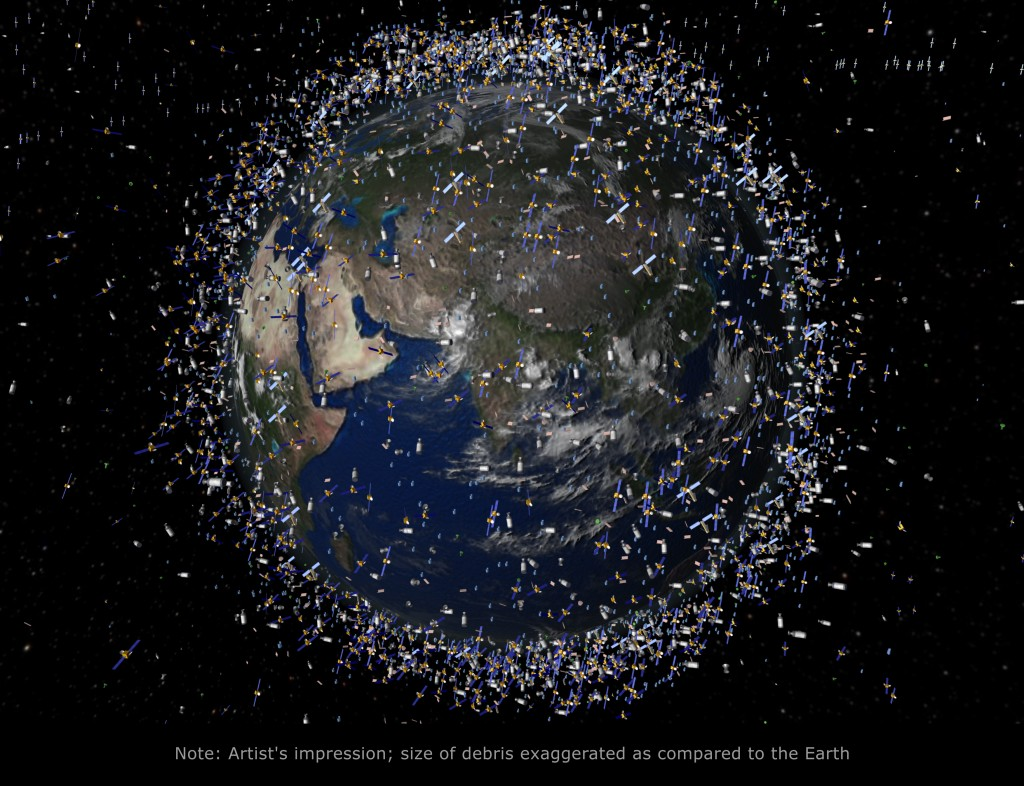
Skeptics correctly note that radiation-hardened hardware, maintenance, and debris risks remain unsolved at data-center scale. A failed server in orbit cannot be swapped by a technician with a screwdriver; it must be designed to fail gracefully or the constellation must accept graceful degradation. Debris in crowded orbits endangers everything sharing the shell, and regulators have grown stricter about large constellations. Most industry roadmaps therefore treat orbital compute as a 2030s possibility rather than a 2026 product, and the Google-SpaceX discussions are best read as exploration rather than commitment.
The companies involved can afford to explore options that never ship; that is what exploration budgets are for.
Why bloggers should care about the trend
Still, the direction of the conversation matters for anyone publishing about technology: the AI buildout is so power-constrained that the industry is literally looking off the planet for solutions, which says everything about where compute demand is heading. For content strategy, it signals that energy, infrastructure and the physical limits of AI will be among the defining tech stories of the next decade, a topic territory where an informed generalist blog can win traffic today while the niche is still forming.